At the Ymir 2026 event I saw there would be a competition for ‘Scandinavian stew’ so I decided to make something for it. I decided to recreate a stew that could have been made with ingredients documentable to the late Viking age, i.e., around the year 1026.
As a member of both the Forestry and Agriculture guilds of the SCA Kingdom of Atlantia, I am inspired to cook with ingredients I have gathered or grown myself whenever possible. For this stew the book An Early Meal was my main source, and in particular the book’s reconstructed recipes for Traveller’s Porridge (p. 98; consisting of smoked pork, butter, barley, stock, and ransoms or leeks) and Boar Stew (p. 78; consisting of pork, butter, mustard seeds, ransoms or leeks, seasonal greens or kale, and wheat seeds). Almost every ingredient I used (see comments below about the huazontle) can be documented to one or more archaeological sites in Viking-age Scandinavia. I also read for general knowledge in Waverly Root’s Food: An authoritative and visual history and dictionary of the foods of the world.
Ingredients:
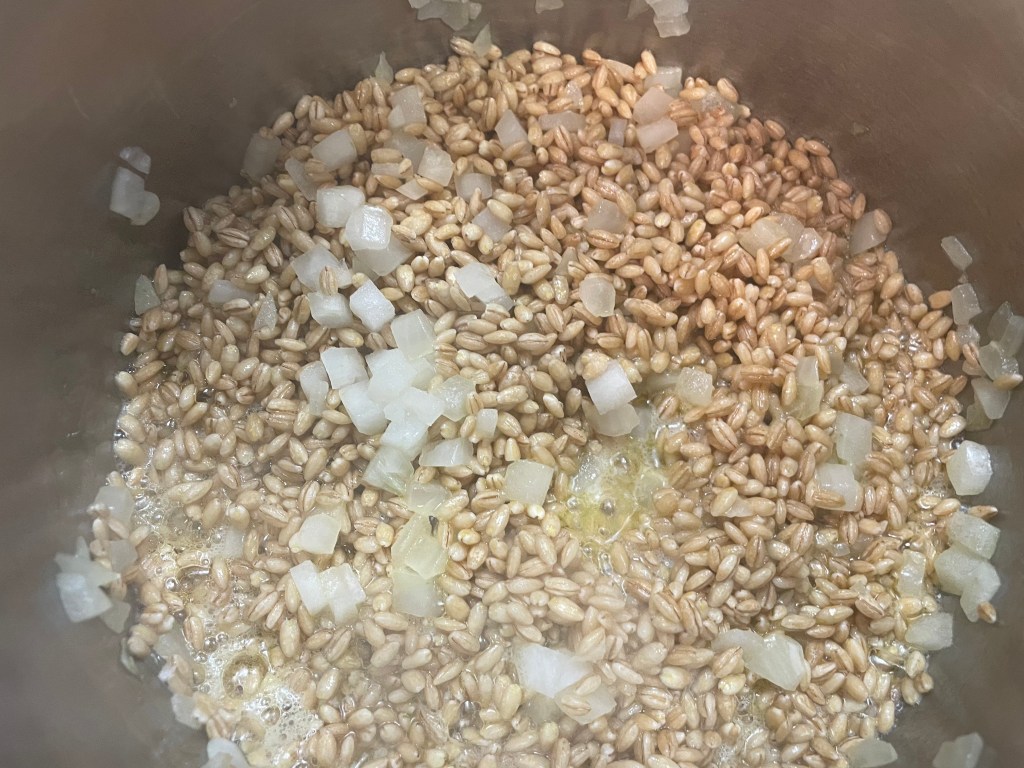
4 Tbs Irish butter: “Perhaps the most important cooking fat in Scandinavia at the time” (Serra & Tunberg, 2013, p. 168).
¼ onion, chopped. I used a sweet onion as the small green onions in my garden apparently all succumbed to this winter’s cold spells.
1 ½ cup pearled barley. Serra and Tunberg note that both hulled and naked varieties have been found and that it likely was the most common cereal grain during this period, being consumed in the form of beer, porridge, and flatbreads. Root concurs that it was “the chief bread grain of continental Europe until the sixteenth century” (p. 22) and that it remains a valuable crop in areas where wheat will not grow. I had bought pearled barley before I learned that it has been processed to remove the hull and some of the bran; this makes it a bit less nutritious but also faster to cook than hulled whole-grain barley.
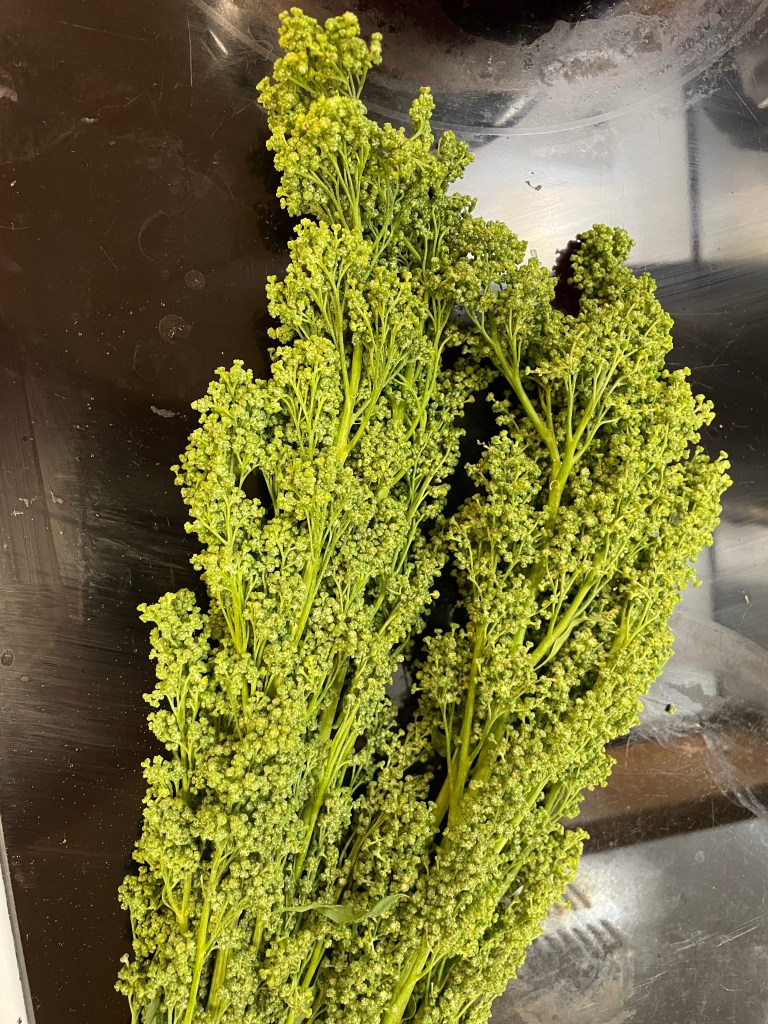
White goosefoot (Chenopodium album) is found in numerous archaeological contexts, according to Serra and Tunberg. The plant is also known as ‘fat hen’ or ‘lamb’s quarters’ as well as a variety of other names, and all parts of it are edible and highly nutritious. There are several closely related varieties of Chenopodium that occur across wide geographic areas of Europe and North America. I used four 1-ounce stems of green flower stalks of Huazontle (Chenopodium nuttalliae or Chenopodium berlandieri) to supplement a quarter cup of dried crushed lamb’s quarters leaves andseeds that I grew.
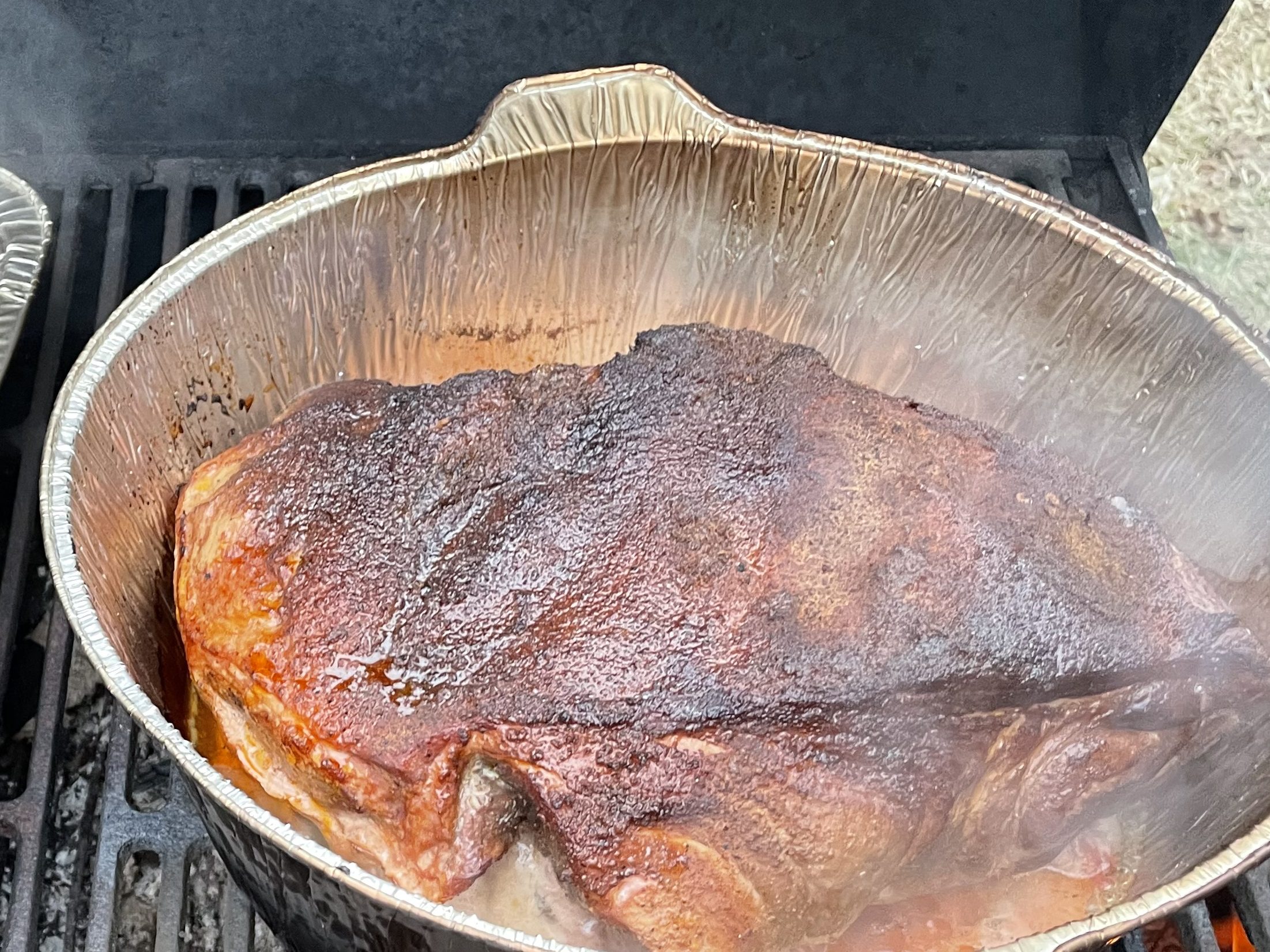
¾ pound smoked roast pork. I smoked and slow roasted a pork shoulder over hickory wood that I grew. I had used small amount of rub on it, which consisted of salt, black pepper, paprika, garlic, and chipotle powder, but the main flavor arose from the smoking process. Hickory is a new world tree not available in Viking-age Scandinavia; chipotle and paprika peppers are New World crops, while long pepper likely was used in this time period rather than black pepper. There’s very little of the rub present in the finished stew, so I mentioned it mostly in case of potential food allergies; these ingredients were what I had available and I enjoy the flavors they impart to the meat.
Approximately ¾ cup milk plus 1 ½-2 cups of buttermilk. I’ve used buttermilk in biscuit and pancake recipes for years, but this was the first time I’ve ever tried using it in a stew.
¼ cup dried apple. I dried the apples myself so they would not have sulfite preservatives. Apples have been used for thousands of years; Root observes the Pliny the Elder was able to name 36 varieties by the first century CE. Serra and Tunberg note that apples in the Viking era likely meant crab apples and that they would have been used for cooking rather than being eaten fresh; the importance of apples in early Scandinavian culture is evident in their mention in the Prose Edda as being the food that kept the Gods young!
½ teaspoon crushed coriander seeds and 1 teaspoon ground mustard. Mustard seed might have been closer but I had the ground mustard already. Serra and Tunberg note finds of coriander from Viking-age Fykat and York, as well as from 11th century Lund. They state further that both yellow and black/brown mustard appear to have been available, with finds from 8th century Denmark and from Viking Age York. I grew the coriander seeds myself. Next time I might crush them a bit more, as biting into half a coriander seed gives a rather intense burst of flavor!
½ cup each chopped mustard greens and purple kale. I grew these in my garden; they survived this winter’s hard freezes, though just barely. Root observes that “Kale may well have been the first form of cabbage to be cultivated” with references to it going back to the ancient Greeks; mustard is even older, having been found in sites dating back to the Stone age and early Iron age.
Salt to taste. I used salt produced from a brine spring in the mountains of Virginia.
What I did: Sauté the onion and barley in the butter until the onion just starts getting transparent. Strip goosefoot seeds from the larger tough stems and add them, stirring occasionally. Sauté for three to four more minutes until the barley just begins to brown. Add four cups of water and simmer for half an hour, then add the smoked roast pork and cook another half hour or until the barley is cooked. Add the milk, buttermilk, dried apple, chopped greens, spices and seeds, and salt to taste. The barley continues to absorb liquid after the heat is turned off, so I found I needed to add a bit more buttermilk or water when reheating to keep it from sticking and burning.
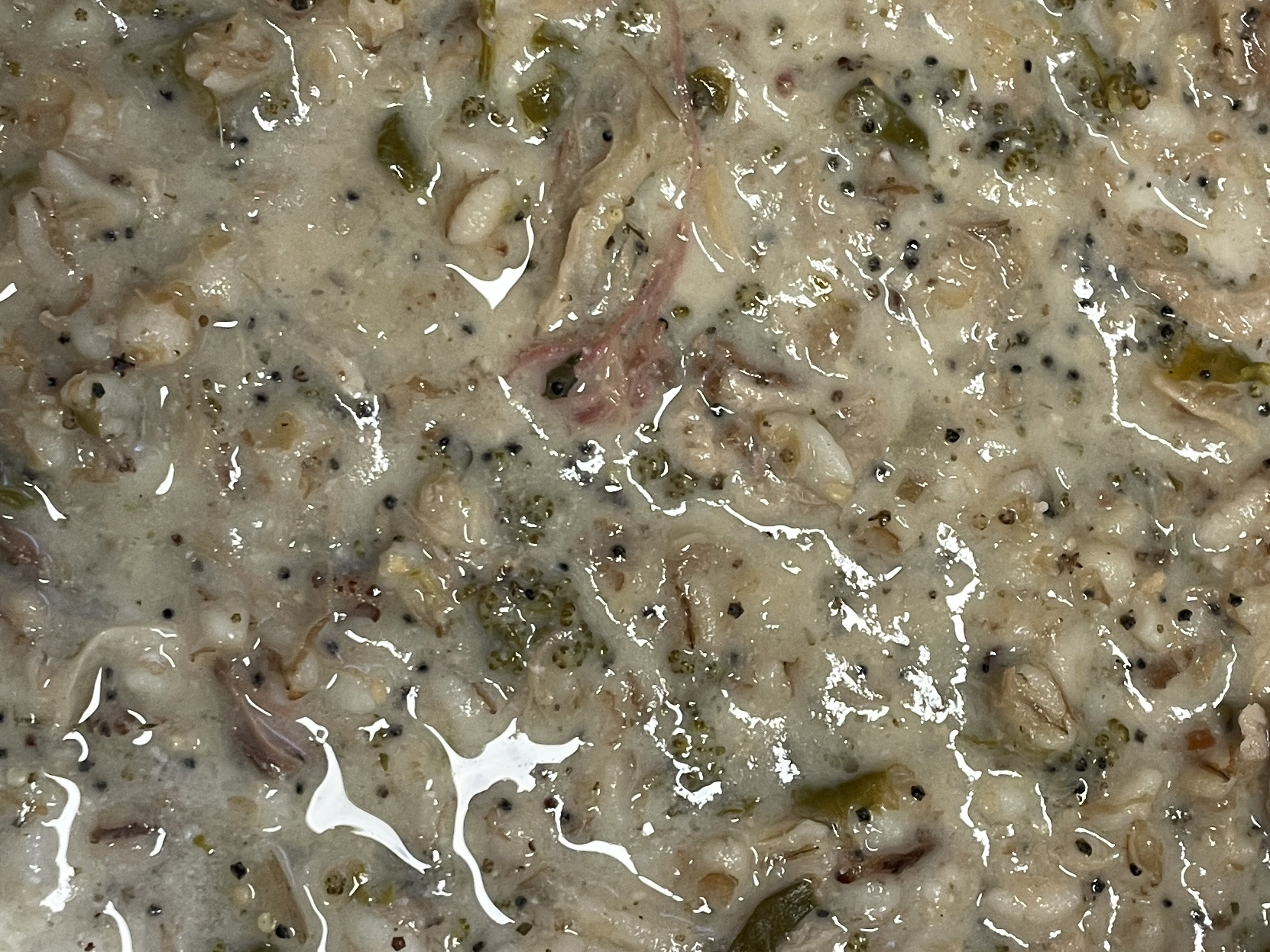
The buttermilk made it creamier in texture but the flavor was not at all sour or curdled like I thought it might have been. The flavors and varied textures all seemed to go well together. I was surprised and quite pleased when this took first place in the stew competition!
References
Root, W. (1980) Food: An authoritative and visual history and dictionary of the foods of the world. Simon & Schuster.
Serra, D. & Tunberg, H. (2013). An early meal: A Viking Age cookbook & culinary odyssey. ChronoCopia Publishing.
 Historic Projects